Be Solar Smart This Winter
Understanding Solar Production, Battery Charging and Grid Usage
Winter can affect how your solar system performs. This is normal for solar energy systems and is mainly caused by shorter days, reduced sunlight, cloudy weather and a lower winter sun path.
At the same time, many electricity tariffs have increased, which means customers may pay more per unit of grid electricity than before.
This guide explains what changes during winter, what you may notice, and how to get the best from your Stage Zero system during the colder months.
Why solar production changes in winter
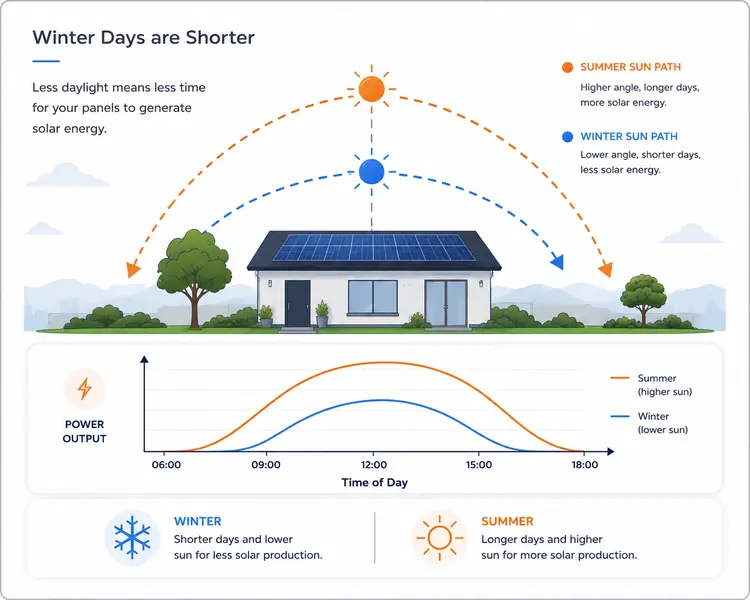
In winter, there are fewer daylight hours. The sun also sits lower in the sky, which can reduce the amount of sunlight available to your panels. Cloudy or rainy weather can reduce production even further.
This means your system may produce less solar energy during winter than it does during summer.
What this means for your battery
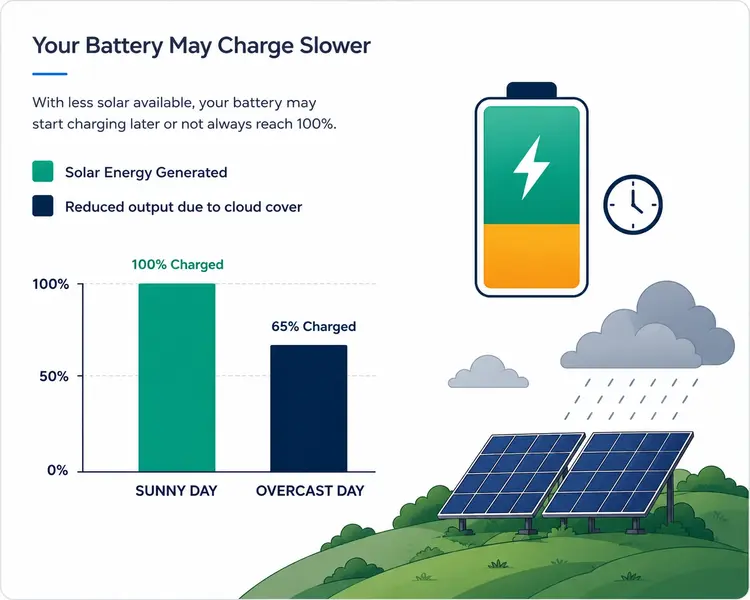
When solar production is lower, there is less solar energy available to charge the battery. This means your battery may:
• Start charging later in the day.
• Charge more slowly.
• Not always reach 100% on cloudy or rainy days.
• Discharge earlier if household usage is high.
This does not necessarily mean there is a problem with your system. It is often a normal result of lower winter solar production or poor weather conditions.
Why grid usage may increase
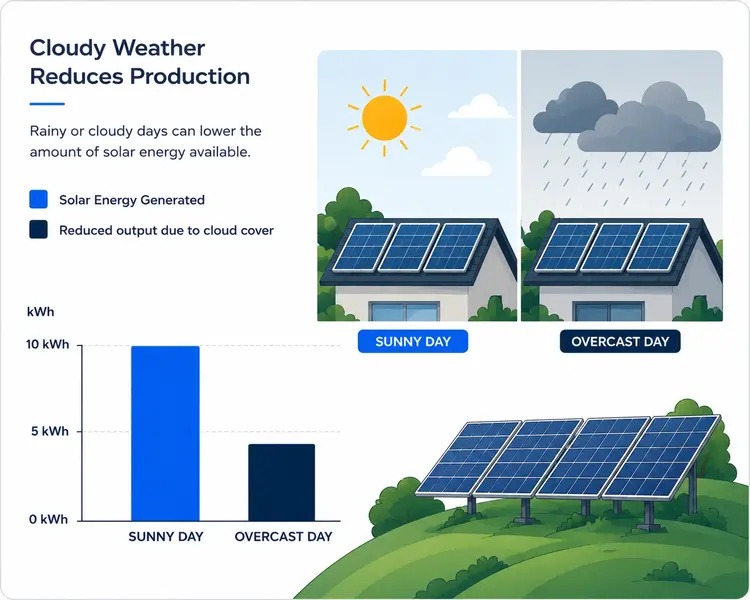
During winter or poor-weather periods, there may be less solar energy available to support your home’s usage.
When this happens, more electricity may need to come from the grid.
This can result in:
• Higher grid import.
• Lower savings during certain periods.
• Higher monthly electricity costs, especially if tariffs have increased.
Electricity tariffs have increased
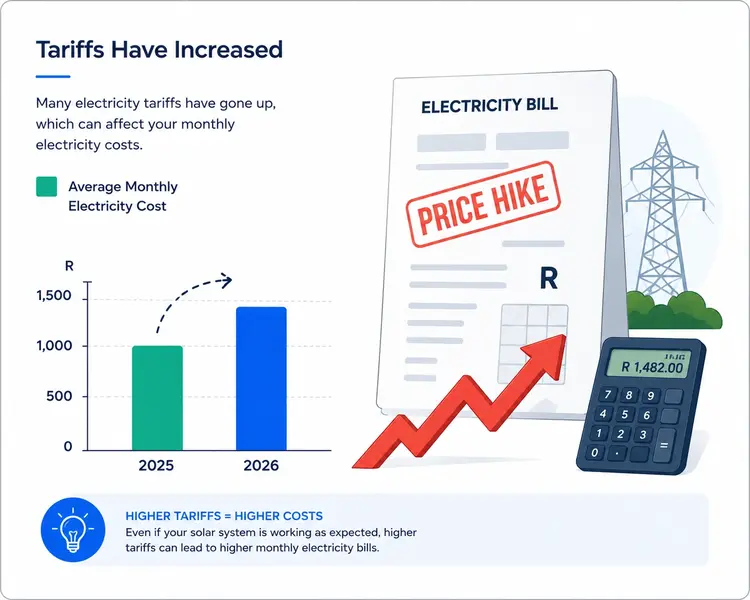
This means that each unit of grid electricity may now cost more than before. So, even if your solar system is working as expected, your monthly electricity cost may still be affected by higher tariffs, especially during periods where more grid electricity is needed.
What you may notice during winter
During winter, you may notice:
- Lower solar production.
- Slower battery charging.
- Your battery not always reaching 100%.
- Higher grid usage on cloudy or rainy days.
- Higher grid usage in the mornings and evenings.
- A change in your monthly electricity costs.
- Lower savings during poor-weather periods.
These changes are usually linked to seasonal weather conditions and household usage patterns.
How to be solar smart this winter
Small changes in how and when you use electricity can help you get more from your solar system.
- Use high-energy appliances during daylight hours
Where possible, use appliances like washing machines, dishwashers, ovens, tumble dryers and pool pumps during the day when solar energy is more likely to be available.
- Avoid running multiple heavy appliances at once
Running several high-energy appliances at the same time can increase the load on your system and may result in more grid usage.
- Be mindful of heating appliances
Heaters, geysers, ovens, kettles and tumble dryers can use a lot of electricity. Try to use them carefully and avoid unnecessary use during peak periods.
- Monitor your usage
Use the Stage Zero app or Customer Zone to keep an eye on your usage, solar production and savings.
- Expect lower production on cloudy and rainy days
Poor weather can reduce solar production. On these days, it is normal to see more grid usage.
- Contact Stage Zero if something looks unusual
If your usage looks unusually high, or if you are concerned that your system is not performing as expected, please contact the Stage Zero team for support.
Your system is still working for you
Your Stage Zero system is designed to help reduce your reliance on the grid and support your home with solar and backup power. Winter conditions can affect production, charging and savings, but understanding these changes can help you manage your usage more effectively.
By being solar smart during winter, you can help your system work harder for your home.