Commercial solar should consider the cost of downtime

Shaune Bouwer, Commercial Engineering Manager at Stage Zero
When households consider solar, the conversation often starts with how much they spend on electricity and how much of that bill they could reduce. For a business, the electricity bill is only one part of the operating picture. Losing power can disrupt business operations and create costs that do not appear on the utility bill.
That is why commercial solar needs to be assessed differently. Before deciding which system makes sense, a business needs to understand the operational cost of losing power and how much continuity is worth to the operation.
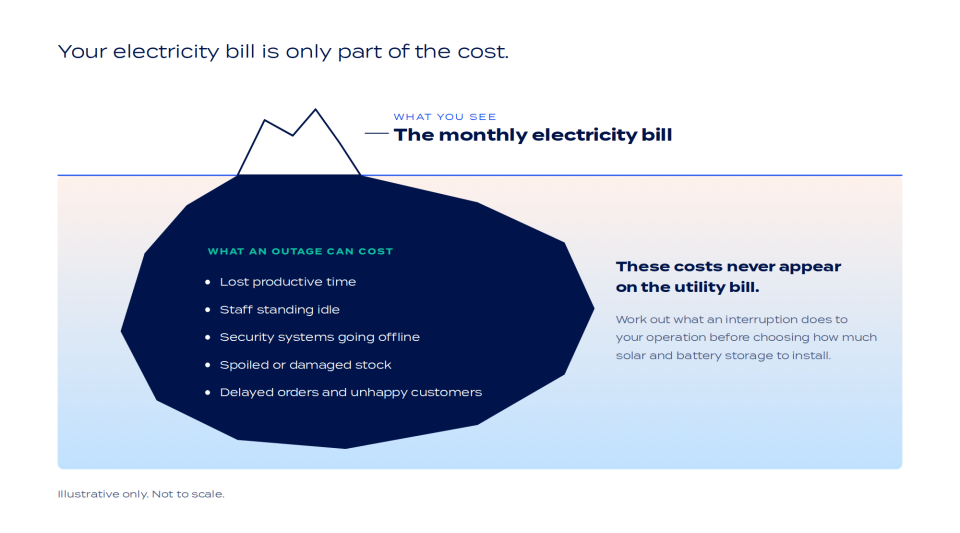
A commercial customer may be willing to accept smaller electricity savings if the system keeps critical parts of the operation running during an outage. In some cases, even reaching a position where the total electricity cost is broadly similar can still make commercial sense if the business is no longer losing productive time when the grid goes down.
That means the return cannot be judged from the electricity bill alone. If continuity prevents losses elsewhere in the business, that value belongs in the same commercial calculation.
Not every load needs the same protection
Battery storage is where this becomes particularly important. Commercial customers sometimes start with the idea that everything should be backed up. The difficulty is that batteries are expensive, and trying to carry every electrical load can quickly drive up the system’s cost.
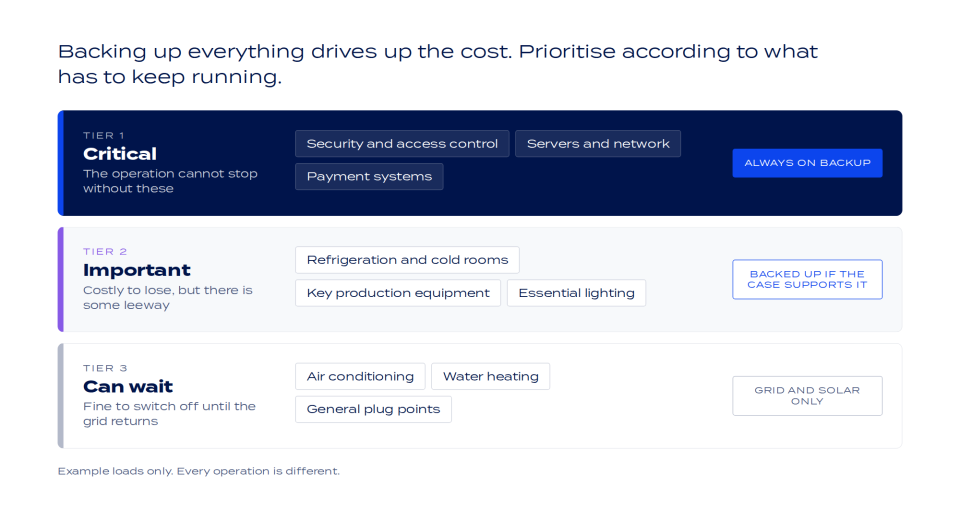
The better approach is to identify the loads that genuinely need backup. We have seen this with a commercial customer whose original system was delivering an acceptable saving, but repeated cable theft in the area meant the battery eventually ran out and the site’s security went down. The client weighed up the benefits and decided to upgrade the system to provide much stronger continuity, even though that changed the savings profile.
For that customer, protecting security became more valuable than chasing the largest possible monthly electricity saving. That is the kind of decision commercial customers need to make before deciding how much battery capacity to install.
The business case has to reflect the operation
I find that businesses are generally pragmatic about solar. Sustainability is a welcome benefit, but the project still needs to be commercially viable.
Customers want to know whether the system will reduce their costs or help them continue operating when grid electricity is unavailable. If the total cost of ownership rises without a business benefit to justify it, the case becomes difficult to make. That is why commercial system design cannot begin with the assumption that every customer needs the same outcome.
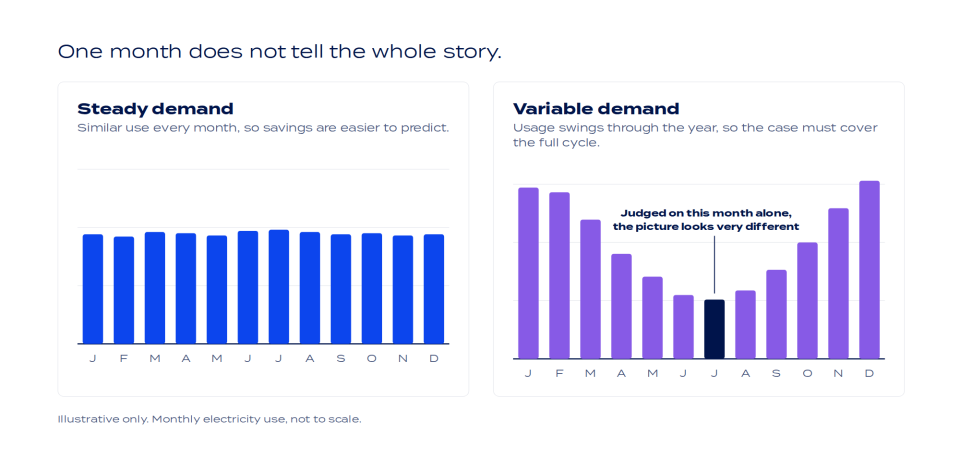
A business with relatively consistent electricity demand will present a different opportunity than one whose consumption changes significantly throughout the year. The economics have to reflect how the particular operation uses electricity rather than relying on a generic monthly savings estimate.
For businesses with highly variable demand, looking at one month in isolation can also be misleading. The value of the system needs to be considered over a period that reflects the customer’s operating pattern.
Savings and continuity need to work together
There can be tension between maximising savings and maximising backup. Battery capacity can strengthen continuity, but additional capacity adds cost to the system. The commercial case therefore depends on how much protection the operation actually needs.
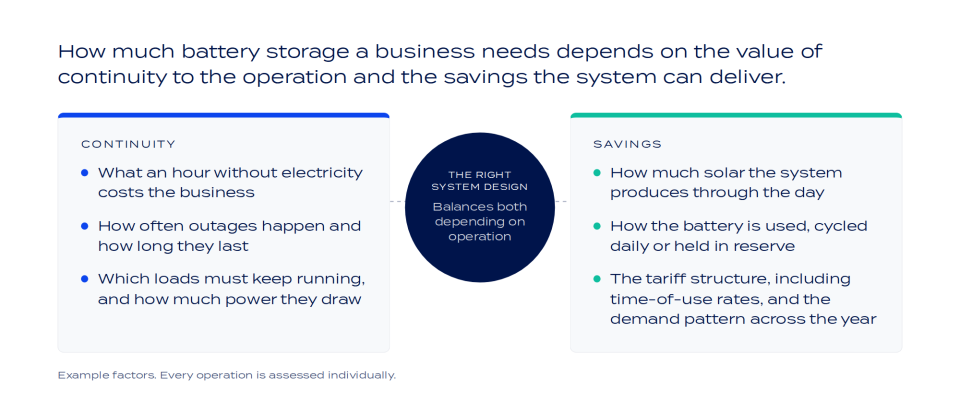
The commercial decision depends on how much continuity the business needs and what it is prepared to spend to achieve it. Our role is to understand how the business operates well enough to identify the point at which the energy system supports the financial and operational outcomes the customer is trying to achieve. The right level of backup will vary by operation because the value of continuity has to justify the cost of providing it.
Start with the cost of an interruption
Before a business asks how much solar it should install, it should understand what losing electricity actually does to the operation.
Loadshedding may not be as prevalent as it once was, but many businesses still suffer from unplanned outages.The financial case for continuity becomes stronger when an interruption stops activity the business cannot afford to lose. Businesses that can tolerate outages more easily have greater scope to optimise the system around electricity savings. For others, avoiding just one costly outage can deliver enough financial value to cover the entire monthly cost of a solar and backup system.
Commercial solar should therefore begin with a clear understanding of how electricity supports the operation and where an outage creates real exposure. That gives us the basis to design a system around the outcome the customer needs.
Is your business ready for its next outage?
Every operation is different, so we design commercial solar and backup power systems around what your business needs to keep running.
Find out how Stage Zero can help you cut energy costs and protect against outages.